He's An All-American Guy...Who Donned a Canadian Uniform to Punch Nazis!
(To be fair, it was bulletproof!)
It's amazing what you could get by mail-order, even in 1941!
The Scarlet Sentry's never-reprinted premiere, illustrated by Charles Sultan, appeared in Red Seal's Yankee Comics #1 (1941), which was published before America entered World War II due to the Axis attack on Pearl Harbor on December 7, 1941. Interestingly, over half the characters introduced in this issue dealt with obvious or implicit German military personnel, spies, or saboteurs! Most comic (and pulp magazine) publishers realized war was coming, they juest weren't sure when! After the invasion of Poland in 1939, they started stacking their character lineups with patriotic heroes and heroines ready to "do their bit" for America!
The Golden Age Character Who Fought Nazis Using an Identity Based on a World War I Poem Returns...
...and if you're confused by that statement, click HERE for an explanation!
Then come back and enjoy the story!
Written and illustrated by George Brenner using the pen-name "Wayne Reid", this never-reprinted story from Quality's Hit Comics #20 (1942) adds a new wrinkle to the series, a German virtual Übermensch...a physically-perfect man, not unlike our own Doc Savage!
But righteous patriotic anger powers our hero, who manages to defeat the stronger enemy, like a David taking-down a Goliath!
We Start June Off with One of the Hottest Nazi-Punchers You'll Ever See...
"Señorita Rio" was the code-name given to popular Hispanic-American film actress Rita Farrar (real name: Consuela Maria Ascencion De Las Vegas), as she spied on against Axis agents in Central and South American countries during World War II.
She was proficient with weapons, and could handle herself in perilous situations, requiring rescue by male associates far less frequently than most heroines of the Golden Age of Comics. Based on real-life actress and World War II pin-up queen Rita Hayworth, whom most people don't realize was Hispanic/Irish-American (Her real name was Margarita Carmen Cansino), Señorita Rio started as a backup feature in Fiction House'sFight Comics #19 in 1942, and took over the cover slot as of #37 for a year. After that, she remained as a backup until #71 (1951), as the series ended with her retiring from espionage and returning full-time to her acting career. The first few Señorita Rio stories, including this premiere tale, were illustrated by noted Golden and Silver Age artist Nick Cardy (using his full name Nick Viscardi), but the bulk of her tales were rendered by one of the few female comic book artists of the era, Lily Renee, who did spectacular work in every comics genre: sci-fi, adventure, superhero, war, western, horror, and romance!
You've already read the final adventure of BlackOut HERE... ...now you'll witness how and why jaded Berlin-based reporter Jack Wayne became such a dedicated fighter for freedom!
Though not an aviator, the multi-talented ex-reporter operated throughout Germany in Holyoke'sCat-Man Comics #10 through #24, proving equal to any challenge presented, except cancellation! This origin tale from Cat-Man Comics V2N15 aka #10 (1942) was illustrated (and possibly written) by Robert Brice, but nobody knows for certain! Later in his career, Brice was credited with scripting his own horror, romance, and war stories, so I'm willing to attribute BlackOut to him as a solo, all-in-one creation!
...this week we bring you his younger self...when he and his crew were first organized to do some serious Nazi-Punching!
Added bonus: the first appearance of their distinctive aircraft, the Grumman Skyrocket!
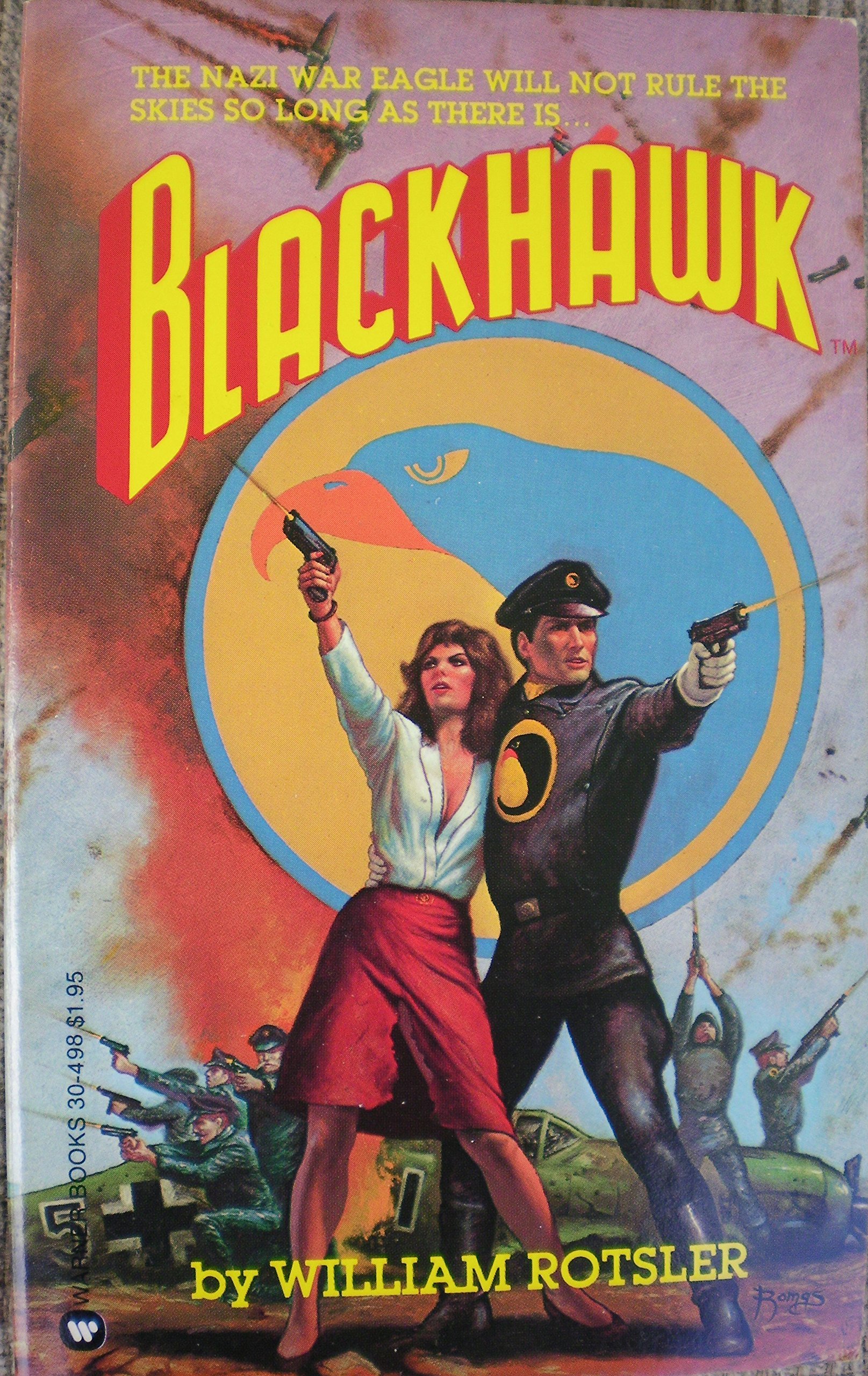
Scripted/laid-out by Will Eisner, and penciled/inked by Chuck Cuidera, the second appearance of Blackhawk, from Quality's Military Comics #2 (1941) clears up a number of aspects, including the fact the team isn't operating openly as a part of the Allied forces!
(America hadn't entered the war at this pre-Pearl Harbor point in history,) Besides the core group, we're introduced to Boris (Ukrainian/Russian) and Zeg (country unknown) along with numerous other unidentified personnel. Zeg appeared several more times during the Golden Age, but Boris disappeared after this issue, popping up again in the Bronze Age as a one-shot villain seeking vengeance against the Blackhawks! Trivia: Though this was the only appearance of the split-tail Skyrockets in the Golden Age strip, when the Blackhawks made their debut in the animated Justice League series in "The Savage Time", an episode set in post D-Day Europe, the original version of the aircraft was front and center! (DC's 1980s revival of the WWII version of Blackhawk restored the split-tailed version to pre-Crisis on Infinite Earths continuity, helping to define which WWII stories were Earth-One and which were Earth-X)!
Director/Animator Dan Riba even constructed a custom maquette of the Skyrocket and sent it to the Korean animation house for reference in animating aerobatics with the distinctive ship properly!
For Some Patriots, Being the President's Personal Special Investigator Just Isn't Enough! They've got to go out on their own time to kick Nazi ass!
Interestingly, though he started this never-reprinted tale from Helnit's Captain Aero Comics #1 (1941) as Captain Hornet, he became Major Hornet by the end of the story! He was Major Hornet from the second story onward. Written by Allen Ulmer and illustrated by Ray Willner, the character appeared steadily in the back of Captain Aero Comics until the book was cancelled in 1944.